St. George Concrete Leveling
- Thousands of satisfied customers
- Local and family owned
- 15+ years in business
- Licensed and insured
- Always FREE Quotes
Licensed Concrete Void Filling in St. George, UT
Voids under slabs lead to settling, cracking, and trip hazards - especially after irrigation leaks or monsoon washouts. We fix that. Our team stabilizes and fills empty spaces beneath concrete with precision foam injection and proven grouting methods, so your surfaces stay level and safe.
We use GPR scanning when needed, 5/8-inch injection ports, and laser monitoring to control lift. With deep experience in Southern Utah soils, we stop erosion paths, restore support, and help prevent future movement. You get durable results without a messy tear-out. Ready to solve it fast? Contact us for a free Concrete Void Filling St. George UT estimate today.
Stronger Slabs, Safer Surfaces, Less Disruption - Why Our Concrete Void Filling Works
You want your concrete safe, stable, and looking right again. Voids allow slabs to sink, crack, and create liabilities. Hiring professionals is the smart way to stop the movement, support the slab, and prevent repeat issues. With our concrete void filling service, you get targeted stabilization, fast turnaround, and clean results backed by local expertise. We diagnose the cause, choose the right material, and deliver lasting support with minimal impact to your day.
Safety & Risk Elimination
Voids create sudden drops and rocking slabs that trip guests and customers. We eliminate those hazards and help you align with ADA change-in-level guidelines (2010 ADA §303: 1/4 inch vertical; 1/2 inch beveled). That means fewer injuries and fewer worries.
We cordon work areas with cones and signage and use OSHA-compliant dust controls to protect your property and people. Our process also reduces water entry points, which helps stop further washout under driveways, sidewalks, patios, and pool decks.
Professional Results & Quality
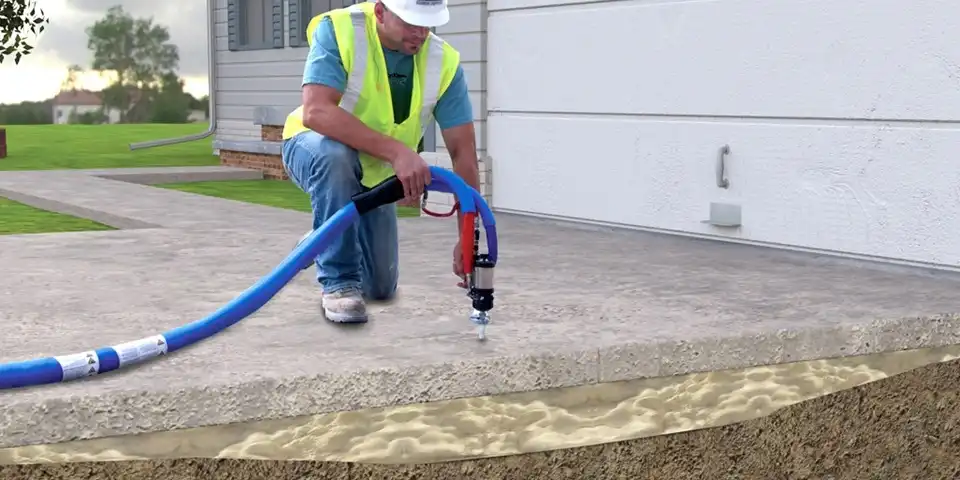
Our crews inject high-density geotechnical polyurethane through small ports to fill gaps and bond soils. We monitor elevation with a laser level and lift in stages to avoid cracking and over-lift. Where appropriate, we can use cementitious grout, CLSM, or lightweight cellular concrete for larger voids.
We follow ACI/ICRI best practices, perform Blue Stakes 811 checks, and can pre-scan with GPR to locate voids and utilities. The result is stable support and level slabs that look right and perform better.
Time & Stress Savings
Most foam void filling projects are completed in hours, not days. Areas are typically ready for foot traffic within 15-30 minutes and vehicle traffic the same day in many cases. No messy tear-out. No long cure times.
We handle everything - from assessment and material selection to cleanup and joint sealing - so you don’t have to coordinate multiple trades or live with a disruption. It’s a smooth, predictable experience.
Cost-Effective Solution
Void repair costs far less than replacing slabs. By stabilizing soils and sealing joints after lift, we help prevent the same problem from returning. That avoids the expense of repeated repairs or full replacement later.
Example: A 2-inch driveway dip caused by gutter runoff can often be stabilized and lifted in a single visit, with injection port patches that blend in and a final joint seal to block water intrusion. You save time and thousands over replacement.
Peace of Mind & Warranty
We’re fully licensed and insured in Utah, follow UOSH/OSHA standards, and document our work. Most projects include a written workmanship warranty detailed in your proposal. You’ll know exactly what was done and what’s covered.
Need proof? We can provide before/after elevation readings, outline our Blue Stakes 811 process, and show you similar local projects. You’ll feel confident your concrete void filling St. George UT project is handled the right way.
How Our Concrete Void Filling Process Works
We make stabilization simple and predictable. Here’s what to expect from start to finish.
- Assessment & Options - We inspect your slab, identify causes, and recommend materials (polyurethane, grout, CLSM/cellular). GPR scanning available when needed.
- Blue Stakes & Prep - We coordinate 811 utility locates (3 business days when required), set traffic control, and mark injection points.
- Injection & Lift - Using 5/8-inch ports, we inject foam or grout, fill voids, and lift in stages while monitoring elevations with a laser.
- Finish & Seal - We patch injection ports, seal cracks/joints to block water, and clean the site.
- Final Walkthrough - We verify results, review maintenance tips, and provide your warranty/closeout.
Why Choose Us for Concrete Void Filling in St. George
At St. George Concrete Leveling, we focus on precise stabilization that lasts. Our team pairs local soil knowledge with professional equipment - polyurethane proportioners, heated hose rigs, laser levels, and optional GPR scanning - to deliver consistent results. We follow Utah licensing requirements, Blue Stakes 811 procedures, and OSHA silica controls to protect your property and our crews. You get honest guidance, clean workmanship, and documented results.
Certified Expertise & Qualifications
We align our practices with ACI and ICRI guidance and maintain training across slab repair, moisture, and surface prep disciplines. For injection scopes, our work is performed under Utah DOPL requirements appropriate to the task (e.g., S260 Asphalt & Concrete, S262 Gunnite & Pressure Grouting, or coordination with E100 when broader scopes apply).
This means your project is executed by a qualified team that understands material behavior, lift staging, and how to stabilize weak soils without creating new stress points.
Safety, Insurance & Compliance
We’re fully insured and operate to OSHA 29 CFR 1926.1153 for respirable silica using HEPA vacuums and dust shrouds when drilling. We call Blue Stakes of Utah 811 at least 3 business days before drilling or injection in covered areas and follow UOSH R614 standards.
For public sidewalks and ROW, we implement site-specific traffic control. We also understand ADA §303 thresholds and how to correct trip hazards while preserving proper drainage.
Technology, Materials & Options
Not all voids are equal. We select from high-density polyurethane foam, cementitious grout, CLSM flowable fill, and lightweight cellular concrete for large or irregular cavities. We control lift with pressure gauges and flow valves and verify results with laser readings.
When needed, we can pre-scan with GPR to locate utilities and estimate void volume, improving bid accuracy and material planning - especially valuable on commercial floors and approach slabs.
Local Knowledge You Can Trust
Southern Utah presents unique challenges - sandy subgrades, caliche layers, irrigation runoff, and storm washouts. We’ve stabilized slabs across Washington, Santa Clara, Ivins, Hurricane, Bloomington Hills, SunRiver, and more.
From residential driveways to warehouse slabs with forklift traffic, we tailor the material and method to your site, loads, and budget - so you get the best long-term outcome.
Customer-First Policies & Warranty
Expect clear proposals, scheduled Blue Stakes coordination, tidy job sites, and proactive communication. Most projects include a written workmanship warranty and post-project care tips.
We also offer seam/joint sealing and drainage suggestions to help keep water out of the slab base - preventing the same issue from returning.
Professional Concrete Void Filling Backed by Local Experience
We stabilize, fill, and lift slabs across St. George & Southern Utah with solutions tailored to the size and cause of your voids. From foam jacking under driveways to CLSM placement for large annular spaces, our methods restore support quickly and cleanly. If you need concrete void filling or slab stabilization in neighborhoods like Washington Fields, Coral Canyon, and Green Valley, we’ve likely solved a project just like yours.
Types of Void-Filling Projects We Handle
Residential: driveways, garage floors, sidewalks, patios, porches, pool decks, and interior slabs. We correct settling, rocking panels, and washout from sprinklers or downspouts.
Commercial/Industrial: warehouse floors, loading docks, ramps, retail walkways, healthcare entries, and approach slabs. We plan around operations and verify tolerances for forklifts and pallet jacks.
Our Proven Methods & Standards
We drill small 5/8-inch ports, inject polyurethane foam or grout, and lift in stages while tracking elevation with a laser straightedge. Ports are patched, and we seal cracks/joints with polyurea or urethane to keep water out.
Where voids are extensive, we deploy cellular concrete (LDCC) or CLSM for uniform fill. GPR pre-scan is available to map cavities and refine material estimates.
Complex Situations We’ve Mastered
Plumbing-leak undermining, erosion along pool decks, and bridge approach settlement require careful planning. We combine soil stabilization foam, compaction grouting, or flowable fill depending on access and load demands.
On larger sites, we implement traffic control, Blue Stakes 811, and staged work windows to keep businesses open while we stabilize slabs.
Results You Can Expect
Typical jobs return to service the same day. We target smooth transitions, improved drainage slope, and reductions in elevation differences to within practical tolerances for the slab type.
Example: A 28-foot sidewalk run lifted up to 1.25 inches with 12 injection points and joint sealing, eliminating three trip hazards and reopening the walkway that afternoon.
Other Services We Offer
- Polyurethane Foam Injection
- Mudjacking Services
- Driveway Leveling
- Sidewalk Leveling
- Patio Leveling
- Garage Floor Leveling
- Pool Deck Leveling
- Concrete Slab Lifting
- Foundation Slab Leveling
- Concrete Settlement Repair
- Sunken Concrete Repair
- Trip Hazard Removal
- Concrete Void Filling
- Soil Stabilization for Concrete Slabs
- Concrete Crack Repair
- Concrete Resurfacing
- Concrete Joint Repair
- Commercial Concrete Leveling
- Warehouse Floor Leveling
- HOA & Community Concrete Repairs
- Concrete Step Leveling
- Porch & Entryway Leveling
- Retaining Wall Stabilization
Locations We Serve
- St. George
- Washington
- Santa Clara
- Hurricane
- Springdale
- La Verkin
- Ivins
- Toquerville
- Leeds
- Cedar City
- Kanab
- Cedar Mountain
- Pine Valley
- Apple Valley
- Dammeron Valley
- Rockville
- Enterprise
- Beryl Junction
- Beaver Dam
- Entrada (St. George)
- Sunriver (St. George)
- Bloomington
- Green Valley
- Bloomington Hills (St. George)
- Santa Clara Hills (St. George)
- Pioneer Park Area (St. George)
- Sunset (St. George)
- Dixie Springs (St. George)
- Ivins Red Mountain (St. George)
- Tuacahn Area (St. George)
- Bloomington Country Club (St. George)
- Washington County
- Iron County
- Kane County
- Beaver County
- Garfield County
Frequently Asked Questions
How do I know if my concrete needs lifting or void filling?
Common signs include hollow sounds when tapped, visible gaps at slab edges, rocking or “see-saw” movement, new or widening cracks, and pooling water where panels settled. Driveways, garage floors, sidewalks, and pool decks in St. George often show these symptoms after irrigation leaks or storms. We inspect the slab, check drainage, and can use GPR to verify voids. If the slab is structurally sound, void filling and leveling usually restore support and alignment without replacement.
How long does polyurethane lifting/void fill take and when can I use the area?
Most residential projects take a few hours. Polyurethane foam cures fast, so areas are typically ready for foot traffic in 15-30 minutes and vehicle traffic the same day, depending on temperature and load. We monitor lift with a laser and stage injections to protect the slab. Commercial sites may require phased work or brief closures. You’ll get a clear plan and return-to-service timeline before we start.
Is polyurethane foam safe and environmentally friendly?
We use high-density, closed-cell geotechnical foam designed for soil stabilization. It is inert after cure, does not wash out, and resists water absorption. Our process uses small injection ports and minimal material to achieve lift. We follow OSHA/UOSH safety standards and control dust when drilling. For large or sensitive areas, we can discuss alternative fills like CLSM or cellular concrete to match site needs in Southern Utah.
Polyjacking vs. mudjacking: which is better for my slab?
Polyjacking uses lightweight, high-density foam that expands to fill voids and lift slabs through small 5/8-inch holes. It cures fast and adds minimal weight to weak soils. Mudjacking uses a sand-cement slurry (heavier and larger holes) and can be effective for certain conditions. We recommend the method based on soil, load (cars, RVs, forklifts), access, and budget. We’ll explain pros/cons and provide pricing for both when appropriate.
How much does concrete void filling cost in St. George?
Costs depend on void size, access, lift height, and material choice (polyurethane foam, grout, CLSM, or cellular concrete). Small residential void fills can be a few hundred dollars; larger or commercial projects vary. We can GPR-scan to better estimate material volume. You’ll receive a fixed, written proposal with scope, inclusions (like joint sealing), warranty terms, and a clear schedule for Washington County zip codes 84770, 84790, 84780, and beyond.
What Blue Stakes 811 steps are required before drilling injection ports?
In Utah, call Blue Stakes 811 at least 3 business days before any covered drilling or excavation so utilities can be marked. We coordinate this for projects where required, especially along sidewalks, driveways near rights-of-way, and commercial sites. After utility clearance, we mark injection points, set traffic control if needed, and proceed safely. This step protects underground lines and keeps your project compliant.
Can a GPR scan quantify the void volume so I get an accurate material estimate?
Yes. Ground Penetrating Radar can map the extent and depth of voids, helping us estimate material needs and refine pricing. We combine GPR data with test injections and elevation checks to avoid over- or under-injecting. This is especially helpful for warehouse floors, approach slabs, and suspected washouts from plumbing leaks. Better data up front leads to a more accurate proposal and fewer surprises.
When should I choose cellular concrete or CLSM instead of polyurethane foam?
For large voids, long runs, or annular spaces where lightweight uniform fill is preferred, cellular concrete (LDCC) or CLSM can be ideal. We use foam or grout for targeted lifts, then switch to LDCC/CLSM when volumes are high or slab loads require broader support. We’ll evaluate soil conditions, drainage, and access to select the most efficient, durable option for your St. George site.
Can void filling fix trip hazards to meet ADA guidelines?
Yes. We level panels and reduce vertical offsets that exceed ADA §303 thresholds (1/4 inch vertical; 1/2 inch beveled). We aim for smooth transitions and restore slope for drainage. After lifting, we seal joints to limit water entry that causes future settlement. For public sidewalks, we set up traffic control and schedule work to minimize impact while improving accessibility and safety.
What areas do you serve around St. George?
We serve St. George and Southern Utah, including Washington, Santa Clara, Ivins, Hurricane, La Verkin, Toquerville, Bloomington, Bloomington Hills, SunRiver, Green Valley, Coral Canyon, and surrounding Washington County communities. We also handle projects across zip codes 84770, 84790, 84780, 84765, 84738, and nearby. Not sure if we come to you? Ask - we frequently work across the region and can accommodate special requests.