St. George Concrete Leveling
- Thousands of satisfied customers
- Local and family owned
- 15+ years in business
- Licensed and insured
- Always FREE Quotes
Licensed & Insured Warehouse Floor Leveling in St. George, UT
Uneven warehouse slabs slow forklifts, rattle inventory, and drive up maintenance costs. In Southern Utah, slab curl, settlement, and joint spalls are common - especially around loading docks and VNA aisles. We correct these issues safely and quickly so your team can move faster, straighter, and with fewer hazards.
At St. George Concrete Leveling, we bring 15+ years of industrial experience to every project. Our ACI-certified crew uses Dipstick floor profilers, planetary grinders, pump-applied self-leveling systems, and polyurethane foam injection to deliver measurable results. We work throughout Fort Pierce Industrial Park and key corridors off I-15. When you need Warehouse Floor Leveling St. George UT, count on documented corrections, minimal disruption, and a clean handoff. Contact us for a free on-site floor assessment.
Safer, Smoother Operations With Professional Warehouse Floor Leveling
You need a floor that supports productivity, not one that fights it. Professional warehouse floor leveling removes bumps, dips, and curled joints that shake loads and slow traffic. With the right blend of grinding, self-leveling underlayments, joint repairs, and stabilization, you get a flatter, stronger surface that protects people, equipment, and product. Our Warehouse Floor Leveling service delivers verifiable improvements with less downtime and clear reporting.
Safety & Risk Elimination
Safety starts with a predictable surface. We correct trip hazards, joint blowouts, and slab steps that violate OSHA 29 CFR 1910.22 Walking-Working Surfaces. Joint rebuilds with polyurea joint filler and targeted dowel bar retrofit restore load transfer and reduce rack impact and pallet drop incidents.
Expect tighter forklift handling, less mast sway, and smoother pedestrian zones. In dock approaches and apron slabs, we level transitions that cause hard hits and wheel damage. Result: fewer incidents, fewer claims, and a safer facility.
Professional Results & Quality
We measure and correct to spec - not guesswork. Using a Dipstick or digital floor profiler, we document flatness/levelness per ASTM E1155 and ACI 117, then correct high spots with diamond grinding and low zones with pump-applied underlayments. For narrow aisles, we perform wheel-path corrections aligned to your equipment needs.
Surface prep follows ICRI 310.2R guidance with shot blasting or scarifying where needed to ensure long-term bond. The outcome is durable, repeatable quality that stands up to heavy forklift traffic and daily washdowns.
Time & Stress Savings
We plan around your operations - overnight, weekend, or phased shutdowns - so you keep shipping. Our crews implement an OSHA 29 CFR 1926.1153 Silica Exposure Control Plan with HEPA dust extractors for clean, low-dust work zones and clear egress routes.
On recent local corrections, we restored eight forklift aisles over two weekend windows while crews staged racking uprights Monday morning. Clear communication, predictable schedules, and professional cleanup keep your team focused on production, not project management.
Cost-Effective Solution
Targeted correction is often more economical than full overlays. Selective grinding, polyurethane foam void fill, and joint rebuilds address the root causes - slab curl, settlement, and poor load transfer - without paying for square footage that doesn’t need it.
Where coatings are planned, we add moisture mitigation epoxy to prevent blistering and failures. Clients routinely avoid 20-40% in unnecessary scope by using data-led floor surveys and phased repairs instead of blanket resurfacing.
Peace of Mind & Warranty
We’re fully insured, licensed with Utah DOPL, and trained for site safety (OSHA 10/30). Your project includes documented testing, a correction log, and a closeout summary so you can demonstrate compliance and due diligence.
Workmanship warranties and manufacturer-backed systems (e.g., moisture vapor barrier epoxy and urethane cement) add long-term confidence. You’ll know exactly what we corrected, why we chose each method, and how to maintain performance over time.
Our Streamlined Warehouse Floor Leveling Process
We keep it simple, transparent, and measurable - from the first walkthrough to the final report. You’ll know what we’ll do, when we’ll do it, and how we’ll verify results.
- Site Visit & Testing - We profile floors with a Dipstick or digital profiler for an ASTM E1155 FF/FL report, check moisture with RH probes (ASTM F2170/F1869), and use thermal imaging where voids are suspected.
- Plan & Proposal - You’ll get a phased correction plan, traffic control map, and safety plan. When required, we coordinate engineer-stamped details for slab stabilization and load transfer.
- Corrections Performed - Methods include diamond grinding, VNA aisle grinding, pump-applied self-leveling underlayment, polyurethane foam void fill/lifting, joint rebuilds, and dowel bar retrofit.
- Quality Verification - We re-profile corrected areas, document measured flatness and levelness, and issue a concise closeout package with test data and notes.
- Turnover & Protection - We apply densifier or moisture mitigation as specified, protect joints, and reopen zones on a schedule aligned to your operations.
Why Choose Us for Warehouse Floor Leveling in St. George
St. George Concrete Leveling is the local partner facilities rely on for precise, documented industrial floor corrections. We’ve delivered measurable improvements for high-bay storage, manufacturing, and logistics clients across Southern Utah. From Fort Pierce Industrial Park to hubs along I-15, we balance speed, safety, and accuracy - backed by certifications, insurance, and transparent reporting. When it has to be right the first time, choose the team trusted for Warehouse Floor Leveling St. George UT.
Certified Expertise & Measurable Tolerances
Your project is led by credentialed professionals: ACI Concrete Flatwork Finisher/Technician, ACI Field Testing Technician Grade I, and ICRI Concrete Slab Moisture Testing Technician. For coating and lining QA, our projects are reviewed by an AMPP/NACE Coating Inspector. We’re active with ACI (Intermountain Chapter), ASCC, ICRI, AGC of Utah, ABC Utah, and the St. George Area Chamber.
We align work to ACI 117 and ASTM E1155, use a Dipstick/digital profiler for data, and provide clear tolerance maps and corrective logs. You get results you can prove - not just “looks flat.”
Safety, Insurance & Compliance
We operate with a documented Silica Exposure Control Plan, HEPA dust extractors, and on-site supervision. Crews hold OSHA 10/30, forklift, and MEWP training. We maintain Utah DOPL licensing (including S260/S220 and related scopes where applicable) and a current St. George City business license.
Certificates of insurance are available same day. Our job hazard analyses cover traffic control, lockout/tagout where needed, and pedestrian safety for active facilities.
Specialized Equipment & Proven Methods
We deploy planetary grinders and edge grinders (Husqvarna/HTC, Lavina), shot blasters (Blastrac), scarifiers, SLU mixing stations and pumps, gauge rakes, spike rollers, and joint saws/chasers. Moisture meters and RH probes verify conditions per ASTM F710 before coatings.
Materials include cementitious self-leveling underlayment, epoxy mortar, moisture vapor barrier epoxy, urethane cement for food and beverage plants, non-shrink grout, and polyurea joint filler. Where required, we add dowel bars or diamond dowels to restore load transfer.
Local Industrial Expertise & Scheduling Flexibility
We know Fort Pierce Industrial Park, River Road corridor, and fast-turn TI schedules. Whether it’s a dock approach, apron slab, or a long VNA aisle, we phase work around shipping windows, including overnight/weekend shutdowns and emergency calls.
We regularly serve Washington City, Hurricane, Ivins, Cedar City, Mesquite NV, and St. George ZIPs 84770, 84790, 84780, and 84737 with quick mobilization and reliable timelines.
Warehouse Floor Leveling Backed by Proven Results Across Southern Utah
We’ve corrected millions of square feet of industrial slab across St. George & Southern Utah. Our warehouse floor work ranges from quick hazard removal to turnkey prep for racking, coatings, and AGV deployment. Whether you manage a distribution center, cold storage, or production floor, we align scope, schedule, and reporting to your goals - so you get durable, measurable improvements from warehouse floor leveling and related services.
Types of Warehouse Projects We Handle
We service distribution centers and 3PL warehouses, VNA high-bay facilities, manufacturing and assembly plants, cold storage/freezers, food & beverage processing, and airplane hangars. Typical projects span 10,000-300,000+ sq ft, including dock leveler ramps and aprons.
Need rapid TI? Our quick-turn programs prepare floors for new tenants, racking layout changes, and robotics/AMR-ready alignments without derailing go-live dates.
Our Proven Methods & Standards
We correct high spots with diamond grinding and address low zones with pump-applied self-leveling underlayment. Surface prep follows ICRI 310.2R; coating areas meet ASTM F710, with moisture mitigation epoxy added when tests indicate risk. Joint rebuilds use rapid polyurea with shave-and-refill for smooth crossings.
For new pours, we coordinate with your GC on laser screed placement and early curing/densifier schedules to hit target tolerances from day one.
Complex Situations We’ve Mastered
We resolve slab curl with relief cuts and stabilization, restore load transfer with dowel bar retrofit, and re-level dock approaches that hammer forklifts. In freezers, we manage heave and condensation issues with rapid-set materials and controlled shutdowns.
We also handle moisture mitigation for epoxy systems, crack stitching with carbon/steel, and VNA aisle grinding Utah-wide for narrow-aisle forklift paths that demand repeatable tracking.
Results You Can Expect
Clients consistently report 15-25% faster forklift travel, fewer pallet vibrations, and 20-30% reductions in caster and wheel replacements. Cleaner crossings reduce employee fatigue and product damage, while smoother aisles protect racking and improve pick accuracy.
A recent Fort Pierce Industrial Park warehouse reopened on Monday after weekend corrections to aisles and docks - no schedule slip, no lost shipments.
Maintenance & Protection Programs
Protect your investment with annual floor surveys, joint inspections, and touch-up grinding where traffic patterns change. We reseal joints, apply densifiers/guards, perform epoxy crack injections, and plan resurfacing only where it’s warranted.
Ask about bundled tolerance compliance programs with documented audits, so you always have current data for insurers, auditors, and corporate standards.
Other Services We Offer
- Polyurethane Foam Injection
- Mudjacking Services
- Driveway Leveling
- Sidewalk Leveling
- Patio Leveling
- Garage Floor Leveling
- Pool Deck Leveling
- Concrete Slab Lifting
- Foundation Slab Leveling
- Concrete Settlement Repair
- Sunken Concrete Repair
- Trip Hazard Removal
- Concrete Void Filling
- Soil Stabilization for Concrete Slabs
- Concrete Crack Repair
- Concrete Resurfacing
- Concrete Joint Repair
- Commercial Concrete Leveling
- Warehouse Floor Leveling
- HOA & Community Concrete Repairs
- Concrete Step Leveling
- Porch & Entryway Leveling
- Retaining Wall Stabilization
Locations We Serve
- St. George
- Washington
- Santa Clara
- Hurricane
- Springdale
- La Verkin
- Ivins
- Toquerville
- Leeds
- Cedar City
- Kanab
- Cedar Mountain
- Pine Valley
- Apple Valley
- Dammeron Valley
- Rockville
- Enterprise
- Beryl Junction
- Beaver Dam
- Entrada (St. George)
- Sunriver (St. George)
- Bloomington
- Green Valley
- Bloomington Hills (St. George)
- Santa Clara Hills (St. George)
- Pioneer Park Area (St. George)
- Sunset (St. George)
- Dixie Springs (St. George)
- Ivins Red Mountain (St. George)
- Tuacahn Area (St. George)
- Bloomington Country Club (St. George)
- Washington County
- Iron County
- Kane County
- Beaver County
- Garfield County
Frequently Asked Questions
How do you level a concrete warehouse floor?
We start with a floor survey to map highs, lows, and joint conditions. High spots are corrected with diamond grinding; low areas receive pump-applied self-leveling underlayment or epoxy mortar. Where settlement or voids exist, we use interior-controlled polyurethane foam injection to lift and stabilize. Joints are rebuilt and filled with polyurea, and surface prep follows ICRI 310.2R so repairs bond and last in demanding St. George UT warehouse environments.
What is ultra-flat, high-tolerance industrial flooring?
Ultra-flat floors meet strict flatness/levelness requirements for high-bay racking and narrow-aisle forklifts. They minimize mast sway, vibration, and picking errors by controlling wheel-path deviation and bump amplitude. We achieve this through precision aisle grinding, selective underlayment placement, and load-transfer improvements. The result is faster travel speeds, safer handling, and fewer maintenance issues for facilities in St. George and surrounding Southern Utah markets.
Can you level an existing warehouse floor without shutdown?
Yes. We phase work zones and schedule overnight or weekend shifts to keep shipping live. Dust is controlled with HEPA extraction and a documented Silica Exposure Control Plan. We coordinate with your operations team to sequence aisles, docks, and staging areas, reopening sections as they pass verification. Most facilities in Fort Pierce Industrial Park continue critical throughput while we correct problem areas.
How does polyurethane foam lifting work for interior slabs?
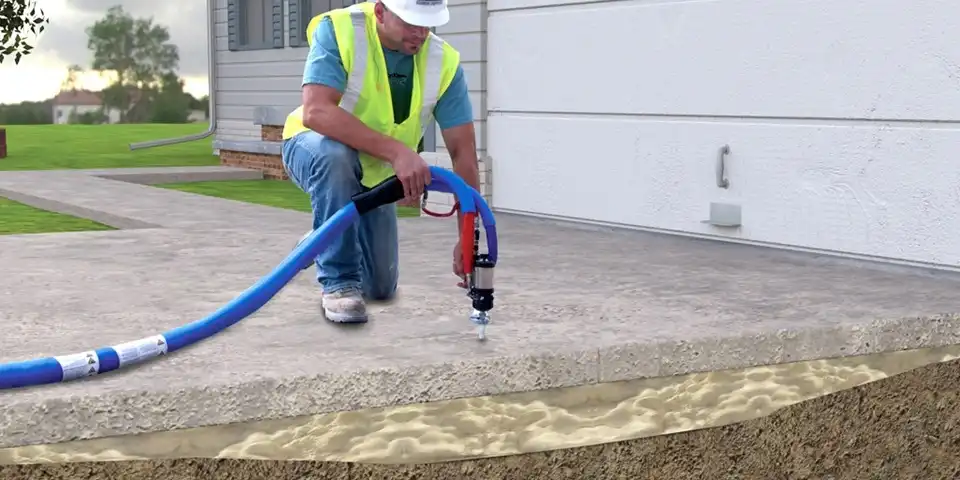
We drill small injection ports and place high-density polyurethane beneath the slab. The foam expands to fill voids and, when needed, gently lifts panels back to plane. This interior-controlled method is fast, clean, and ideal near machinery or racking. We monitor movement in real time with rotary/laser levels and confirm stability before joint rebuilds or topping work proceeds.
What floor systems are best for forklift traffic?
Durability depends on traffic type and cleaning. Many St. George warehouses choose polished concrete with densifier for low-maintenance shine, or moisture-tolerant epoxy/epoxy mortar where chemical resistance is needed. Food and beverage plants often use urethane cement. For worn slabs with dips, we install cementitious self-leveling underlayment first, then finish with a coating or polish system based on your operations and budget.
What is F-min and when is it required for VNA aisles?
F-min is a specialized wheel-path flatness standard for very narrow aisle forklifts. It focuses on the tracks tires follow rather than overall slab metrics. If you use VNA trucks, your racking supplier or OEM will specify the needed F-min class. We perform targeted wheel-path grinding and verification to help your aisles meet those requirements in St. George UT facilities.
How long before operations can resume after leveling?
It depends on the method. Diamond-ground aisles typically reopen immediately after cleaning. Self-leveling underlayments often support foot traffic in a few hours and equipment traffic within 24-48 hours, depending on thickness and temperature. Polyurethane foam lifting is fast - many areas return to service the same shift. We’ll phase work so critical aisles and docks come back online first.
Do you service Fort Pierce Industrial Park and nearby ZIP codes?
Absolutely. We cover Fort Pierce Industrial Park, the River Road corridor, and facilities across Washington City, Hurricane, Ivins, Cedar City, and Mesquite NV. Common ZIP codes include 84770, 84790, 84780, and 84737. Our crews mobilize quickly with overnight and weekend availability to minimize downtime.
Can you coordinate engineer-stamped plans for slab leveling and load transfer retrofits?
Yes. For complex conditions - slab curl, pumping joints, or failed dowels - we can coordinate engineer-stamped details and calculations. We implement dowel bar retrofit, stabilization, and joint rebuilds, then provide post-correction data and a closeout package. That way, your records document both the corrective design and the verified results for auditors and insurers in St. George UT.
What causes warehouse slabs to curl or become uneven?
Common causes include differential drying shrinkage, inadequate load transfer at joints, subgrade settlement, repetitive forklift impact, and moisture imbalance beneath the slab. Over time, joints open and edges curl, creating steps and spalls. Our approach addresses both symptoms and causes with grinding, underlayments, joint rebuilds, moisture mitigation, and, when needed, dowel or diamond dowel retrofits.